
GHK-Cu vs BPC-157
A copper-binding peptide vs a gastric protein fragment. Both studied in tissue research, through different mechanisms.
What is the difference
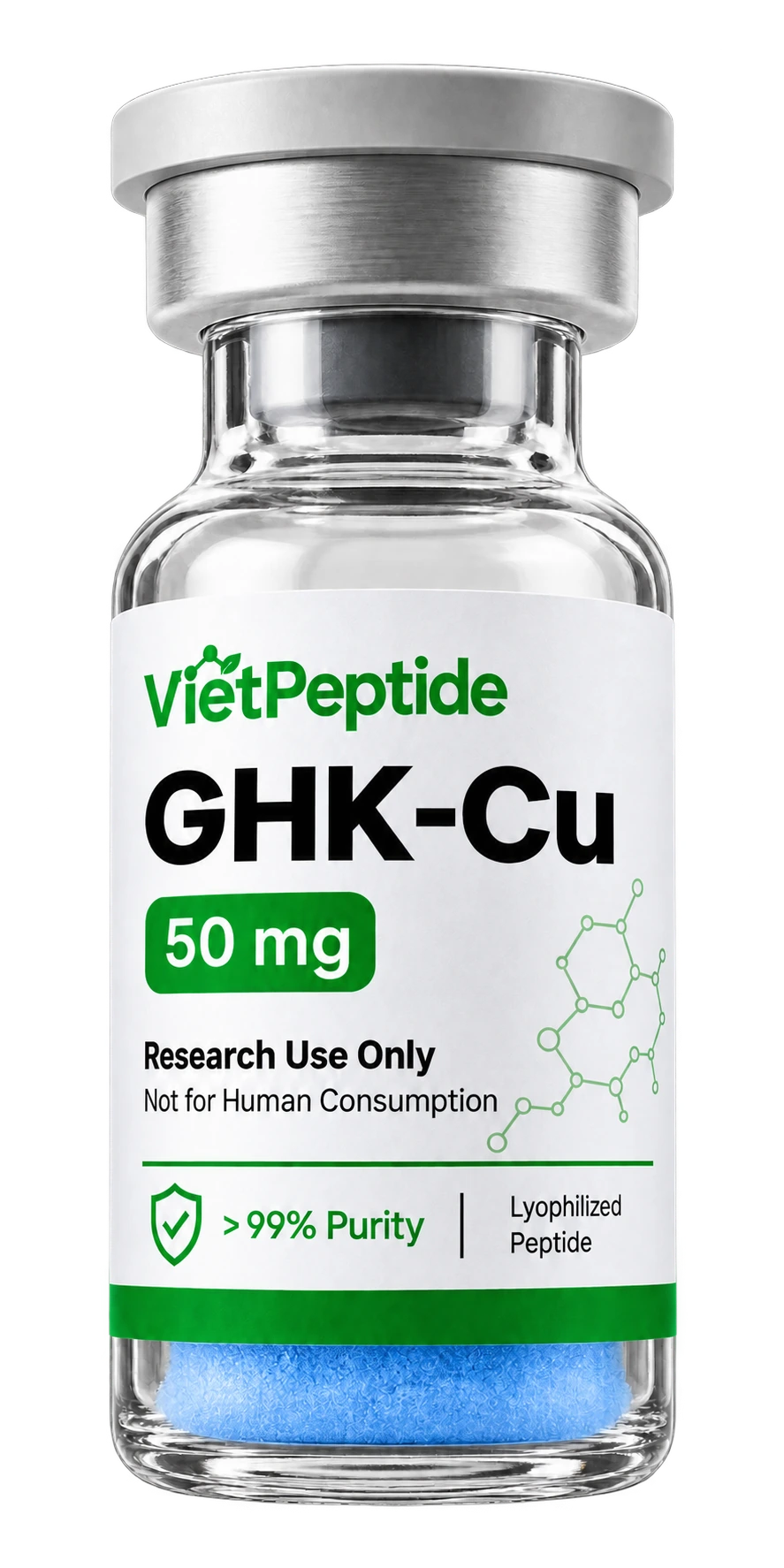
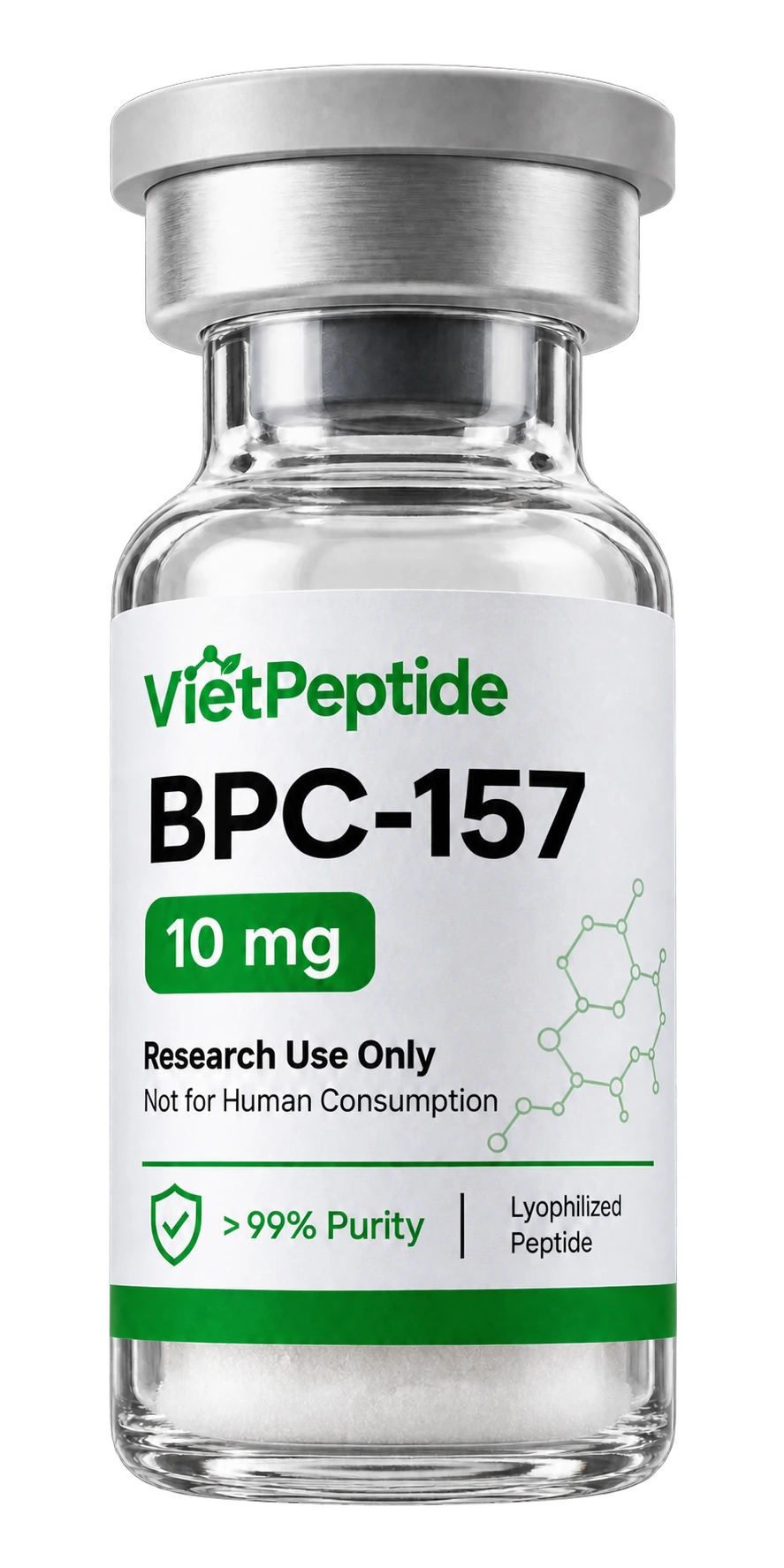
GHK-Cu and BPC-157 are two structurally different peptides that both appear in tissue research. GHK-Cu binds copper and is studied for extracellular matrix regulation. BPC-157 does not bind copper and is studied for angiogenesis signalling. The page clarifies the difference.
| Property | GHK-Cu | BPC-157 |
|---|---|---|
| Structure | Tripeptide + copper ion (Gly-His-Lys-Cu) | 15-amino-acid fragment (pentadecapeptide) |
| Mechanism | Copper-dependent ECM regulation | Angiogenesis and fibroblast signalling |
| Common format | 50 mg and 100 mg lyophilized powder | 10 mg vial |
| Research focus | Skin matrix and collagen research | Tissue repair and vascular research |
| VND price | from 1,000,000 VND | 1,400,000 VND |
Bottom line
Different structures, different mechanisms, different research questions. They are not substitutes. They address distinct aspects of tissue science. Both in the catalog.
Ask about GHK-Cu or BPC-157
Format, price and timing confirmed before payment. Free swabs + syringe with every order.
Common questions
Which of these peptides is better for research?
Neither is "better": GHK-Cu and BPC-157 address different research questions through different mechanisms. The choice depends on the research protocol.
Can I order both peptides from this catalog?
Yes. GHK-Cu and BPC-157 are listed as separate items. 2+ peptides = free bacteriostatic water 3 ml. Price and availability confirmed before payment.
Do I need a separate inquiry for each peptide?
No. You can ask about both in one Telegram message. Mention the names and formats and the manager will confirm availability, total and timing.