
NAD+ vs MOTS-c
Both are linked to mitochondrial research. Through completely different pathways. Here is the difference.
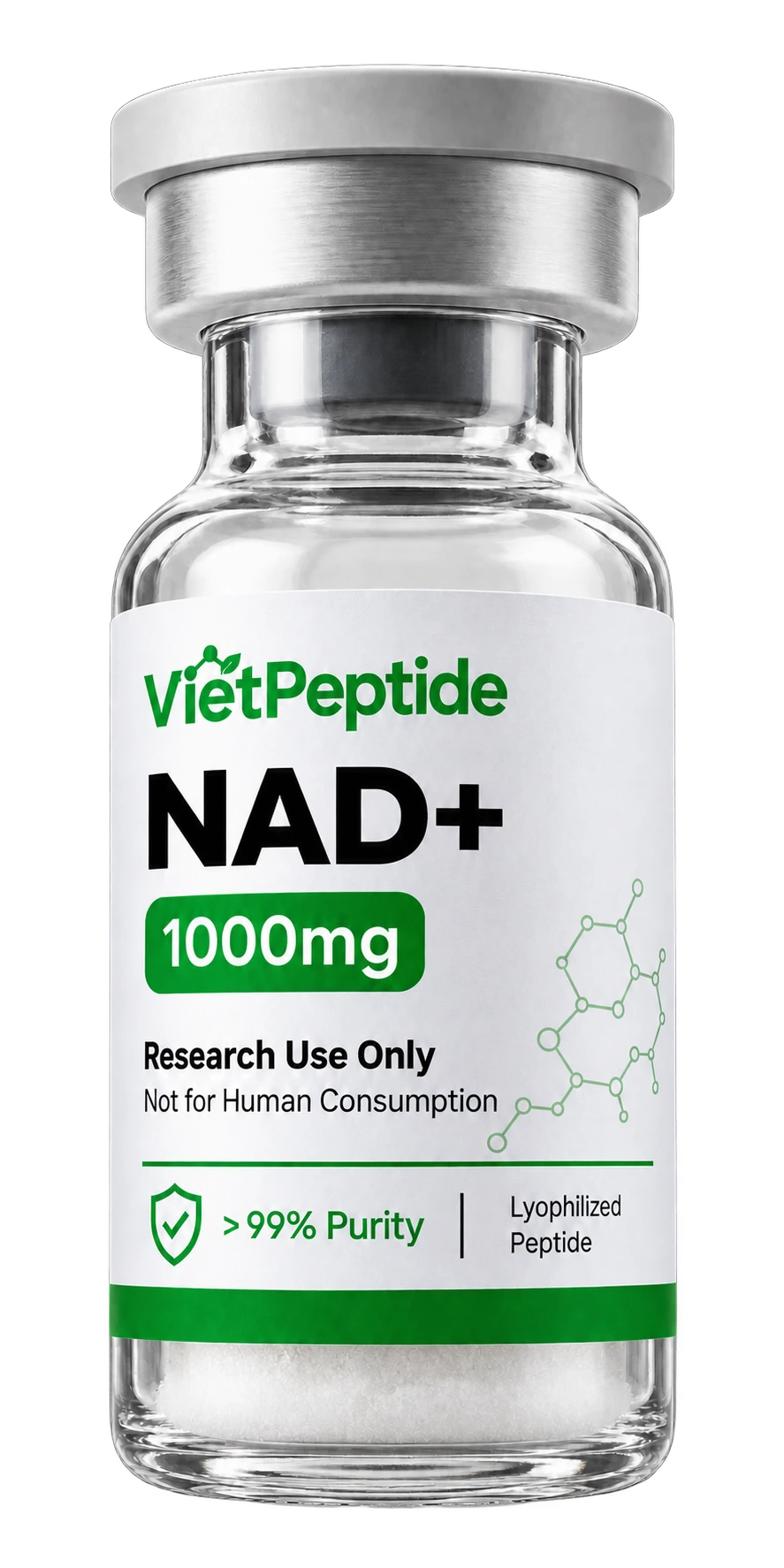
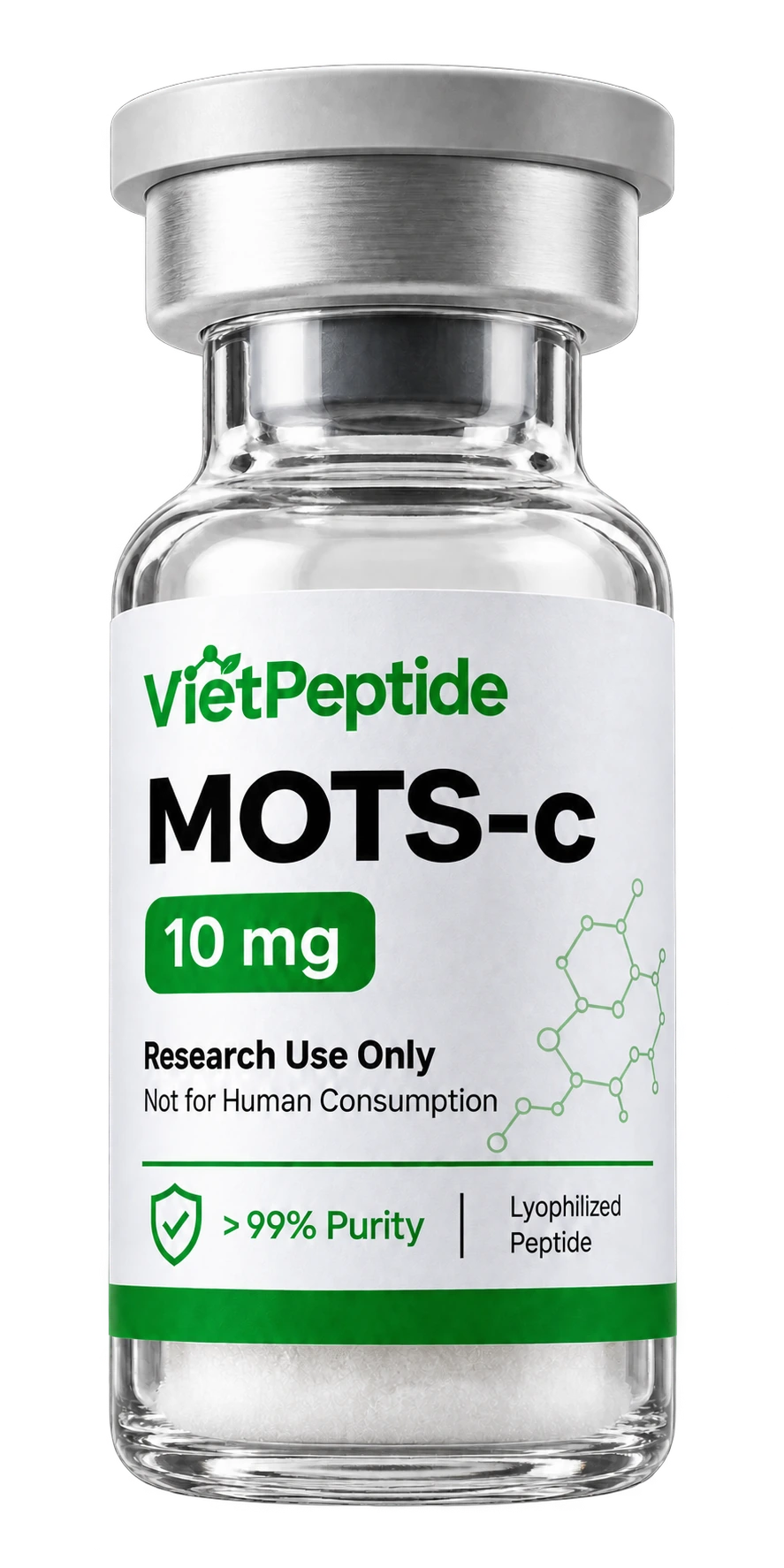
What is the difference
NAD+ is a coenzyme central to cellular energy metabolism. MOTS-c is a mitochondrial-derived peptide that signals metabolic adaptation. Both appear in longevity research but operate at different levels. One is a substrate, the other is a signal.
| Property | NAD+ | MOTS-c |
|---|---|---|
| Type | Coenzyme (dinucleotide) | Mitochondrial-derived peptide (16 amino acids) |
| Role | Redox reactions, energy metabolism substrate | Signals metabolic adaptation to stress |
| Common formats | 700 mg and 1000 mg | 10 mg and 40 mg |
| Research focus | Cellular energy and aging | Mitochondrial signaling and metabolism |
| VND price | 2,800,000 VND | from 1,800,000 VND |
Bottom line
NAD+ is a coenzyme, MOTS-c is a signal. They address different levels of mitochondrial biology. Both available, check your protocol.
Ask about NAD+ or MOTS-c
Format, price and timing confirmed before payment. Free swabs + syringe with every order.
Common questions
Which of these peptides is better for research?
Neither is "better": NAD+ and MOTS-c address different research questions through different mechanisms. The choice depends on the research protocol.
Can I order both peptides from this catalog?
Yes. NAD+ and MOTS-c are listed as separate items. 2+ peptides = free bacteriostatic water 3 ml. Price and availability confirmed before payment.
Do I need a separate inquiry for each peptide?
No. You can ask about both in one Telegram message. Mention the names and formats and the manager will confirm availability, total and timing.